By Candlelight and Cunning: Golden Age Clue-Hiding Tricks You Can Steal for Your Own Mystery Night
Photo: vintage candlelit desk with wax sealed letters and mystery clue cards, via www.babeyond.com
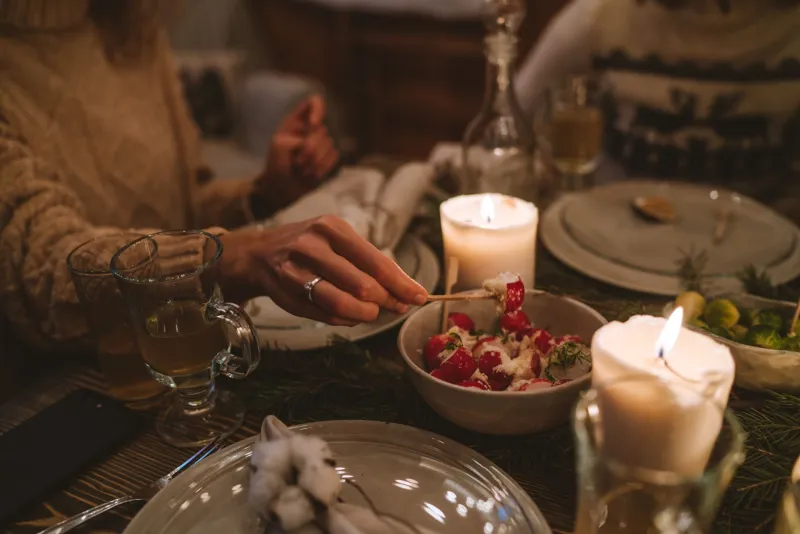
Golden Age detective fiction was written for readers who liked their murders well-lit on the page and badly lit in the room. Agatha Christie, Dorothy L. Sayers, Ngaio Marsh and Margery Allingham all understood that a candle is not simply a candle. It is a clock, a concealment, a witness and, if the plot is going well, a fire hazard with a secret. The best of those tricks still work today — and they are remarkably easy to borrow for a candlelit whodunit at home.
Why Golden Age writers loved a bad bulb
The classic country-house mystery depends on limited light. A drawing room lit by a single lamp, a fire sinking in the grate, a torch beam cutting across a face: these are not cosmetic details. They are engines of suspicion. When guests cannot see everything, they fill the gaps with imagination. When a character claims to have seen something by firelight, the reader is invited to doubt them. The candle becomes an unreliable narrator with a wax habit.
Christie in particular treated domestic lighting as part of the plot. In The Sittaford Mystery, the table-turning scene works because the room is intimate, the light is low and everyone is relying on senses other than sight. In Hercule Poirot's Christmas, the fire and the draughts do almost as much work as the suspects. Even when the exact clue is fair and visible, the atmosphere makes the reader feel that certainty is a luxury nobody can afford. That is the mood you want in your own front room.
Christie's candlelit toolkit
One of the great Golden Age tricks is the candle as timer. A candle that has burned down to a stub can tell you how long a room was empty, or how long a suspect lingered. For hosts, this translates beautifully into prop design. Give a candle stub a marked height, add a trail of wax, and let your detectives argue about whether it proves anything at all. The joy is not in the forensic accuracy. The joy is in the argument.
Then there is the shadow clue. Golden Age novels love a silhouette on a wall, a figure seen through frosted glass, a shape that might be a man or might be a hat stand. You can stage this at home with a lamp, a screen and a carefully cut card. Place the shadow clue where it will only appear when most of the room is dark. A guest who notices it feels brilliant. A guest who misses it feels wonderfully suspicious of everyone else.
Firelight is another classic. A dying fire changes the colour of a room and makes faces harder to read. In a party kit, you can borrow this by creating a lights-low moment with LED candles and one warm lamp. Ask guests to describe what they saw during those minutes. Their answers will be vaguer than they expect, and vagueness is the beginning of a good accusation.
Wax, soot and the physical clue
Golden Age detectives adore physical clues that seem ordinary until they are not: a smear of wax, a burnt scrap of paper, a soot mark on a sleeve. You do not need to recreate a forensic laboratory. You need a few tactile objects that reward close attention. Seal an envelope with wax and let a tiny chip flake onto the table. Add a half-burnt note in a fireproof dish, with one crucial word still legible. Put a candle in a holder with a deliberate scrape on the base.
The trick is fairness. Christie's best clues are hidden in plain sight, not cheated into existence at the last minute. Your guests should be able to solve the mystery from what they can see, hear and touch. If the answer depends on a detail nobody could possibly notice, that is not cunning. That is just a riddle with a candle in front of it.
Stealing the tricks for your 2026 party kit
Start with the printing. Candlelit clue cards need large type, high contrast and matte paper. Avoid glossy finishes that catch the light and turn half the sentence into a glare. If you are using real candles, keep the clue cards well away from them; LED candles are the sensible understudy. Give the host a small red-filtered torch for reading notes without wrecking the mood.
Next, design one clue that only works in low light. A shadow on a wall, a message written on the inside of a lampshade, a card that must be held close to a candle to reveal a watermark — all of these feel delightfully Golden Age without requiring a butler. Just make sure the effect is reliable and safe. A clue that depends on a naked flame is a clue too far. Use a torch behind a screen, a battery candle and a little rehearsal instead.
Finally, script a deliberate pause. Golden Age novels are full of moments when the room goes quiet and the detective asks everyone to think carefully. Do the same. Dim the lights, light one more candle, and ask each suspect what they remember. The answers will be imperfect. The accusations will be spirited. And somewhere in the flicker, your own little Christie moment will arrive.