Borrowed Bones: Building a Party Mystery Around a Genuine Unsolved Case Without Being Ghoulish
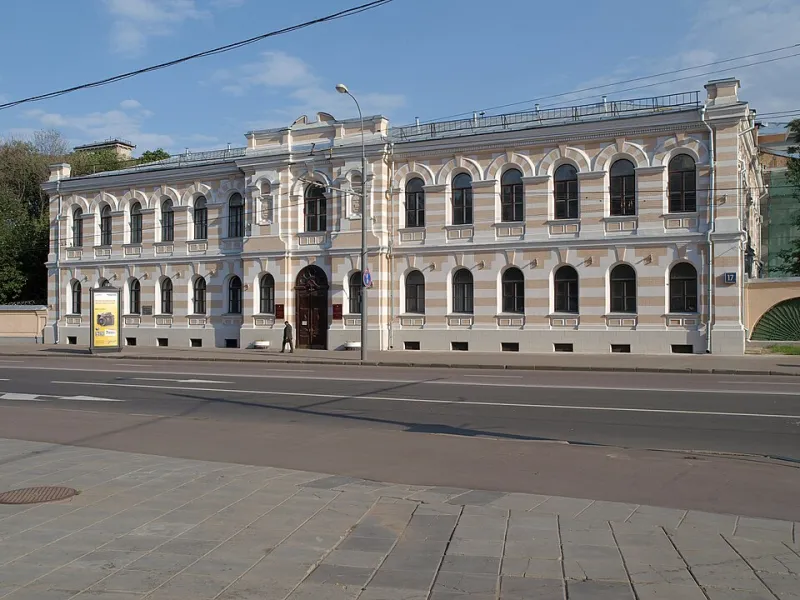
Photo: NVO, CC BY-SA 3.0, via Wikimedia Commons
Every party mystery begins with a body. Every good one begins with a decision about whose body it is not.
That sounds glib, so let me be plainer. The unsolved cases that fill the British newspaper archives are extraordinarily seductive to anyone who designs games. They arrive pre-plotted: missing hours, contradictory statements, a scene processed by men in hats who lost the one piece of evidence that mattered. Free structure, delivered in a cardboard box at the county record office.
And yet a real death is not a puzzle piece. Somewhere in the file there is a family. So the question for the candlelit host is not whether real cases can inspire us — they obviously can — but how much of one you are permitted to borrow.
Why the archives tempt us
A fictional mystery has to be built from nothing, and every builder knows the weak joint: the motive that does not quite hold, the suspect who exists only to be red herring. Real investigations are lumpy in a way invented ones rarely dare to be. Witnesses misremember. Constables pursue the wrong man for a fortnight. A crucial letter turns up in a solicitor's office three years later. That messiness is exactly what makes a modern audience lean in, and it is precisely what a tidy writer would sand away.
The rule of three removes
If you take nothing else from this piece, take this: remove the name, remove the place, move the period. Then, having done all three, look at what is left and ask whether any of it could lead a curious guest back to a real person.
The period shift is the important one. A case from the 1920s or 1930s sits far enough back that no living witness, sibling or child remains likely to encounter your beer-mat clue trail — while still offering the delicious limitations of interwar policing. Telegraph boys. Boot prints in wet clay. A doctor whose testimony is trusted absolutely and should not be.
Read the records for structure, not sensation
Useful hunting grounds include the British Newspaper Archive, the Old Bailey Proceedings for pre-1913 trials, local record offices and coroner's files, trade directories, census returns and the local history shelf of any decent reference library. Read them as a game designer, not a ghoul. You are not looking for how awful it was. You are looking for the shape: who found the body, who benefited, who was interviewed twice and why, what the investigators got wrong first.
Write those five answers down and then close the file. The five answers are your blueprint. The rest is somebody's grief.
What to take and what to leave
Take: the sequence of the evening, the geography of a small community, the class friction, the procedural blind spots, the reason nobody could prove anything. Take the emotional weather of a village where everyone knows everyone and one person is lying.
Leave: the manner of death in any detail, the victim's real occupation and family circumstances, the names of anyone involved, and any quotation lifted from a real statement. Also leave the temptation to advertise the thing as 'based on a true story'. You are not retelling; you are borrowing architecture, and you should say so in the pack itself, in one calm line near the front.
Assembling a fictional case file
Here is a workable method. Fix your invented year, your invented village and your invented victim — someone with a trade that gives them enemies: a licensee with a debts problem, a solicitor holding a will nobody has read, a landowner selling to a buyer nobody has met.
Then derive suspects from structural roles rather than real people. You need the one who found the body, the one who lied about the time, the one who gains financially, and the one who does not belong. Give each of them three true facts and one lie. Make sure the lie is provable by a physical clue, not by a hunch — a party audience will forgive a lot but never a solution that depends on intuition.
Clues, forensics and the era's blind spots
Period setting is a gift to clue design. Fingerprints are understood but patchily recorded. Blood typing arrives in the early twentieth century and DNA is pure science fiction. Alibis hang on train timetables, a publican's clock that runs eight minutes fast, a neighbour who saw a bicycle. A telegram can arrive at the wrong hour and ruin everything. The doctor can be confidently wrong. None of this requires a single borrowed detail from a real tragedy — it requires a library card and a rainy afternoon.
The cold-case frame as a hosting device
The most elegant way to honour a real case is to use its genre rather than its content. Hand each table an 'archive box': a folder of witness statements in different typewriters, a photograph of a street (staged, invented), a reviewer's memo from a later decade noting that the original inquiry overlooked something. Candlelight does the rest. If you can arrange it so that the first ten minutes are silent reading by candle flame, you will hear a room go genuinely still — the rarest sound in amateur theatre.
An ethics checklist before you print anything
One: no name survives, not even 'changed slightly'. Two: no living person could reasonably identify themselves or a relative. Three: the death itself is never dramatised — your game begins after it. Four: nothing in the marketing promises a true crime experience. Five: the pack states plainly that the story is invented and only the investigative shape is historical. Six: if a case is recent enough that it might still have an active file or a family campaigning for answers, walk away and invent something instead. There are ten thousand unnamed villages in the imagination; use one.
The point of a candlelit whodunit is to give a room of people the pleasure of thinking hard together. That pleasure costs nothing to invent, and it should never be paid for out of somebody else's history.