Purls Before Swine: A Candlelit Whodunit for the Village Knitting Circle

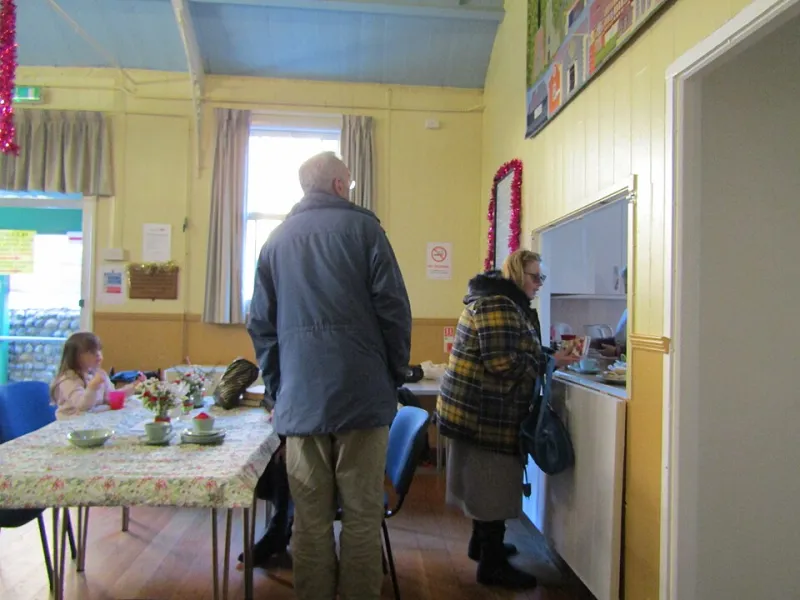
Photo: Photo by Joe Mabel, CC BY-SA 4.0, via Wikimedia Commons
Village knitting circles are deceptively peaceful. A few rows of moss stitch, a plate of custard creams, and suddenly someone has been 'helping' with your cable pattern since 2019. All of which makes a knitting circle an ideal candlelit crime scene: the motives are small, the memories are long, and everyone has a lethal pair of 4mm needles in her bag. We are, of course, speaking fictionally. Please do not weaponise the needles.
Set the Scene Without Scaring the Vicar
You need a village hall, a tea urn, six to eight players and enough chairs to form a loose semicircle. Put battery tea lights in jam jars along the windowsill and one real candle—well out of reach of acrylic yarn—on the tea table. The room should smell faintly of wool, biscuits and mild suspicion. If your hall has a stage, resist it. A knitting circle mystery works best at close quarters, where everyone can see who is pretending to count stitches.
Casting is simple. Give every guest a name badge, a half-finished project and a character card: the Chair, who controls the biscuit rota; the Treasurer, who controls the raffle tin; the Pattern Keeper, who controls the photocopier; the New Member, who asks suspiciously good questions; the Yarn-Shop Owner, who knows everyone’s stash; and the Visiting Tutor, who uses words like 'tension' in a way that feels personal. Add a Vicar or a Parish Council observer if you need a seventh or eighth. They can be entirely innocent, which is its own kind of fun.
The Missing Skein and the Mangled Pattern
The plot is bloodless and beautifully petty. The circle is knitting a charity blanket in honour of a much-loved former member. The centrepiece is a limited-edition skein of damson merino, donated by the yarn shop, intended for the border. On the night of the mystery, the skein has vanished from the communal basket, and the master copy of the blanket pattern has been sabotaged: row 14 now says 'knit 2 together' three times in a row. In a knitting circle, that is practically a hostage situation.
Your detective—call them DI Purl—asks everyone to keep knitting while the truth is unpicked. The suspects must circulate, compare labels, mutter about dye lots and generally behave like people who have never trusted a self-striping yarn.
Clue Stations for Crafty Suspects
Build clues into the objects your guests already handle. It keeps the evening tactile and gives the less theatrical players something to do with their hands.
-
The yarn label. A discarded label in the bin has the damson shade name but a different dye lot from the donated skein. The shop owner can confirm only one customer bought that dye lot. The label also has a small tick in the corner—matching the Treasurer’s habit of marking receipts.
-
The pattern book. The sabotaged row 14 is written in pencil, not the Pattern Keeper’s usual blue biro. On the facing page is a faint indentation: 'if short, use contrast for row 15.' Only someone who had already knitted the border would know that. The Visiting Tutor’s sample mitten is on the table; its border is contrast.
-
The seating plan. The tea rota is also the seating plan. Someone has moved the Treasurer’s chair next to the radiator, where the communal basket sits. The rota has initials in the margin and a small drawing of a biscuit. The Chair claims not to recognise it. The Vicar recognises it immediately.
-
The swatch library. A rogue gauge swatch in damson is hidden in a teacup. It is slightly looser than the Treasurer’s usual tension. This matters because the Treasurer has been secretly knitting a memorial cushion for the former member’s family—and ran out of the donated yarn halfway through.
-
The charity tin. The raffle tin is 40p short. This is not the crime, but it is excellent misdirection. Someone will confess to buying a raffle ticket and forgetting to pay. Let them. It gives the innocent something to look guilty about.
Keep the Candlelight Cosy, Not Combustible
A knitting circle plus real candles plus acrylic yarn is a fire-safety lecture waiting to happen. Use LED candles in jam jars for most of the room, and keep any real flame on a metal tray, away from loose fibre, pattern paper and the person who always brings a mohair blend. Do not let anyone lean over a candle to examine a clue. Provide a small torch—or, better, a phone light—for close reading. The aesthetic can be candlelit without anyone’s jumper going up like a bonfire.
The Gentle Denouement Over Tea
When the final stitch is cast off, gather everyone into the circle. Ask each suspect to name the clue that most inconvenienced them. Then let DI Purl walk through the evidence: the dye-lot label, the pencil correction, the moved chair, the loose swatch. The culprit is the Treasurer, who took the damson skein to finish a secret memorial cushion and altered the pattern because she was too proud to admit she had run short. She did not mean to sabotage the blanket. She meant to save face. In a village, those are often the same thing.
The denouement should be gentle. No handcuffs, no shouting, no dramatic confession through tears. The Treasurer apologises, the Chair admits she knew about the cushion, the Yarn-Shop Owner offers a replacement skein at cost, and everyone agrees the blanket will be even better with a contrast border. Then tea, cake, and a new rota for who buys the biscuits. Justice, in a knitting circle, is mostly administrative.
Hosting Notes
Allow two and a half hours: forty minutes to settle and knit, an hour of clue-hunting, twenty minutes for the denouement, and the rest for tea. Print character cards on card stock and slip them into small yarn envelopes. Give each guest a mini skein as a favour—not the damson, obviously. Keep the real pattern locked away. And if someone asks whether they can bring their own needles, say yes. A knitting circle whodunit without knitting is just a meeting with extra steps.