Pitch Imperfect: A Candlelit Choir-Rehearsal Whodunit for Suspicious Sopranos
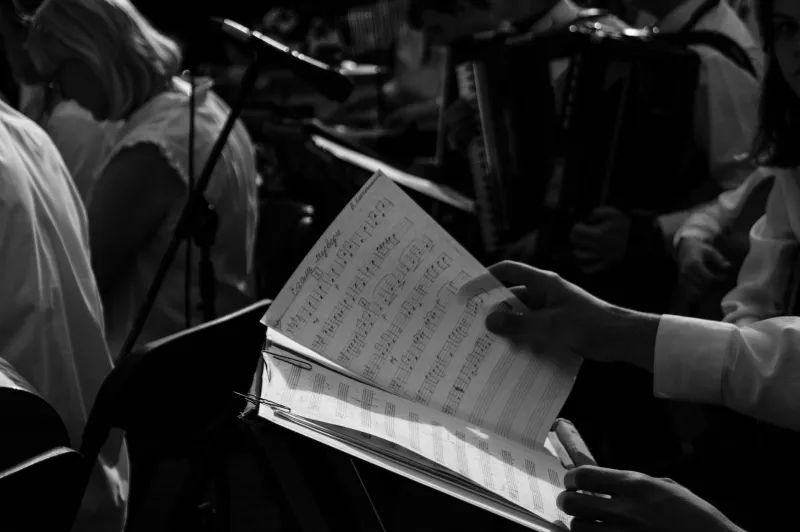
There is something inherently suspicious about a choir rehearsal. Everyone is standing in neat rows, pretending to be nice, while silently keeping score. The sopranos think the altos are flat. The altos think the sopranos are theatrical. The tenors have gone missing again, possibly to fetch a music stand, possibly to avoid the second verse. Add a tea urn, a stack of ancient hymnals and a candle or two, and you have the perfect setting for a cosy whodunit — no actual murder required, just a fictional victim and a room full of people who can hit a high note and hold a grudge.
First, choose a crime that fits the rehearsal
You do not need a body under the piano. A bloodless mystery works beautifully in a church hall or village institute, especially if your choir includes people who faint at the sight of a blunt pencil. The victim can be a fictional visiting soloist, a much-feared adjudicator or the imaginary conductor who insisted on extra rehearsals during half-term. The crime might be the theft of a winning competition score, the sabotage of a descant or the disappearance of the choir’s only working baton.
Keep the stakes musical and mildly ridiculous. A missing cake from the interval table is comedy; a missing chorister is a different evening altogether. Your suspects should have motives that feel enormous to them and charmingly small to everyone else: the alto who was moved to the back row, the tenor who was told to mouth the words, the accompanist who has been asked to play ‘a little quieter’ since September.
Casting the choir without causing a schism
Do not assign suspects by actual choir politics. That way lies a passive-aggressive email chain and a permanent change of rehearsal night. Instead, hand out character cards at the door, ideally printed on slightly yellowed paper and tucked inside a music folder. Give each singer a secret and a reason to look shifty. The soprano who always arrives early can be the victim’s rival. The bass who never speaks can be the keeper of a terrible secret. The person who volunteers to make the tea can be the alibi everyone doubts, purely because they were alone with the kettle.
If you have a choir leader who enjoys a bit of theatre, let them act as the detective — or, better still, the suspect who keeps trying to take charge. A conductor in a cape is optional but effective. The key is to make everyone a little bit silly and nobody genuinely uncomfortable. The best choir whodunits feel like an extended interval, not an audition for a crime drama.
Hide clues where singers actually look
Sheet music is a gift for clue-hiding. Slip a pencilled note into the second soprano’s copy of the anthem: ‘I know about the audition.’ Put a tiny mark beside a breath mark in the tenor part and let the sleuths argue about whether it is a code or just the accompanist’s coffee cup. Write a suspicious message on the back of a hymn book in faint pencil, then provide a torch and a magnifying glass because candlelight is atmospheric but not always forensic.
Interval biscuits are the other great clue delivery system. A custard cream with a bite taken out of it can suggest someone left the rehearsal in a hurry. A Bourbon biscuit arranged on a plate in a suspicious pattern is either evidence or just a very British still life. Wrap a folded clue around a chocolate finger and watch a room of adults become instantly willing to investigate the biscuit tin.
Do not overdo it. Three or four strong clues are better than seventeen pieces of paper that make the hall look like a recycling bin. The aim is a gentle trail of breadcrumbs, not a music theory exam.
The tea urn is not the murderer, probably
The tea urn is the emotional centre of any choir rehearsal. It is also a wonderful red herring. Let one suspect be convinced the urn holds the answer. Let another insist the urn has always been unreliable. Someone can produce a witness statement from the church hall caretaker claiming the urn ‘made a funny noise in 2019’, which is the kind of detail that proves nothing and yet feels deeply relevant.
Just keep real safety sensible. Use battery-operated candles near sheet music, hymn books and anything that rustles. If you are using real candles, station them well away from the choir’s paperwork and the biscuit table, and never leave them unattended. A candlelit whodunit should end with applause, not a fire drill.
Keep the atmosphere tuneful, not tense
A choir is already an ensemble, so lean into the music. Begin the evening with a warm-up that doubles as a clue: a note held too long, a phrase sung too smugly, a soprano who insists on adding an unrequested ornament. Let the suspects rehearse a short, terrible arrangement of something familiar. If the victim is fictional, the choir can sing them a farewell madrigal. If the crime is a stolen score, the final denouement can involve a dramatic rendition of the missing line.
Humour works best when it is dry and inclusive. Poke fun at rehearsal habits — the latecomer, the loud page-turner, the person who claims they are ‘just marking it lightly’ — rather than at anyone’s actual voice. The aim is for everyone to leave saying, ‘I can’t believe I accused the alto section,’ not ‘I can’t believe what she said about my breathing.’
Bring down the baton
Gather the suspects at the end, preferably near the tea urn and within reach of a biscuit. Have the detective recap the clues with the solemnity of a final cadence. Then reveal the culprit, hand out a small prize — a novelty baton, a certificate for ‘Most Suspicious Use of a Hymnal’ — and let the choir sing something cheerful.
A choir-practice whodunit works because it turns the ordinary into the theatrical. The sheet music becomes evidence, the interval becomes an investigation and the second soprano becomes a person of interest. All you need is a little candlelight, a suspicious biscuit and a choir willing to ham it up between verses. Pitch imperfect, perhaps — but perfectly cosy.