Buffer Stops and Betrayal: A Candlelit Whodunit for the Model Railway Club
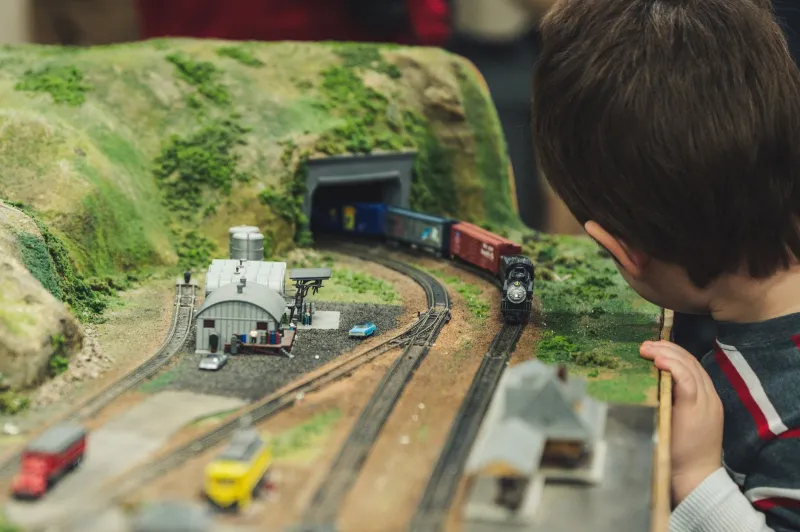
Model railway clubs run on quiet order: tiny signals, strict timetables and an unspoken agreement that nobody touches the scenic bridge. A murder, therefore, is a magnificent disruption. But staging a candlelit whodunit in a room full of delicate layouts, solvent-based glues and electrics needs a steady hand on the controller. The aim is Agatha Christie meets a branch-line preservation society — suspenseful, silly and absolutely safe for the rolling stock.
All Aboard the Suspect List
Start with eight to twelve members and give each one a reason to be shifty. The Stationmaster is your victim: found face-down beside the goods shed, ideally clutching a folded timetable and looking mildly inconvenienced. Around him, station the Club Secretary, who knows where every key is kept and insists the minutes will prove everything. Add a Treasurer with a suspiciously new set of coaches, a Junior Member who was supposedly cleaning track, a Rival Enthusiast who covets the clubroom lease, and a Tea Lady who has heard every secret in the building while diplomatically stirring the urn.
Round things off with a Signaller who controls the timetable, a Layout Designer with strong opinions about ballast, and a Visiting Railwayana Collector who claims to be there for the vintage timetables. Give each player a short character card: one secret, one alibi, one grudge. Nobody needs a Shakespearean monologue. A single whispered line such as ‘I was in the fiddle yard, and I can prove it’ is enough to set tongues wagging between the biscuit tins.
Safety First, Signals Second
This is the bit where cosy does not mean carefree. Model railway rooms are wonderful fire hazards in disguise: scenic lichen, foam board, polystyrene, aerosol paints, thinners and a spaghetti of extension leads. A single real candle near a layout is not atmosphere; it is an incident report waiting to happen.
Use battery-operated pillar candles, LED lanterns and warm-white fairy lights for the main event. If the venue permits real candles at all, keep them in sturdy glass holders on cleared, non-flammable surfaces well away from layouts, curtains, paperwork and the tea table. Check the smoke alarms, know where the extinguisher lives and keep exits clear. Appoint a Safety Signalman — a member with a torch and a firm manner — to patrol the room and prevent anyone from draping a paper clue over a hot bulb.
Cable-tie extension leads along edges or use cable ramps across walkways. Leave generous aisles between tables so guests can move without knocking a signal box into the next parish. In short: the only thing that should go up in flames is the tension.
The Timetable Is the Clue
A printed timetable is the perfect cosy-crime prop. Invent a branch line with a ghost service: a train listed at 19:42 that does not exist, or a platform alteration nobody remembers making. Add a signal box log with an entry scratched out, a wagon number repeated in two suspicious places and a ticket wallet containing a seat reservation for the victim. The timetable becomes the mystery’s spine, and every suspect has a reason to lie about where they were when the 19:42 should have departed.
Place clues where people can actually find them. A folded note inside a tiny goods shed is charming; a clue wedged beneath a fragile tunnel portal is an invitation to disaster. Use removable labels on station buildings and clear plastic clue wallets rather than pushing paper into delicate scenery. Keep a spare set of clues behind the bar in case a miniature avalanche occurs.
Let the Layout Do the Acting
Your miniature world can carry the drama without carrying the risk. Treat each scenic area as a district of the mystery: the goods yard, the platform, the signal box and the fiddle yard. Suspects move between them on cue, and a model train can deliver a clue into the station with a satisfying wobble. A goods wagon carrying a folded note is far more theatrical than a text message.
Use a train whistle to signal the next round, and invent gentle penalties for anyone who blocks a walkway: a ‘leaves on the line’ delay card or a forced visit to the rail replacement bus. Keep the model railway itself out of bounds for rough handling. Members can run trains as part of the performance, but the layout remains scenery, not a suspect.
The Candlelit Platform Showdown
For the finale, dim the main lights and arrange chairs like platform benches. LED lanterns and flameless candles give you the glow without the smoke damage. Bring the suspects together, recap the timetable, the wagon number and the altered platform, then let the sleuths make their accusations.
The denouement should land properly: the culprit is the person whose alibi depended on a train that never ran. Perhaps the Rival Enthusiast wanted the lease, or the Treasurer needed the clubroom quiet for a very private conversion. Either way, keep it bloodless, end with a satisfying click of the signal lever and send the Stationmaster off to the tea urn to be revived by strong refreshment. Nobody dies for real in a model railway club; they simply get an extended delay.
Practical Notes for Club Committees
Allow around two hours plus tea. Put catering in a separate room or far corner, and keep the urn away from the layouts. Check the club’s insurance covers the event, even if it is a fundraiser for the roof fund. Make sure the room is accessible, with wide aisles and seating for anyone who needs it. Photographs are allowed, but brief the photographer not to use flash near anyone delivering a dramatic confession. And finally, remind the members that the miniature world is for atmosphere, not for interrogation. Buffer stops and betrayal are all very well — but the layout has suffered enough.