Dame, Villain, Stage Left: A Candlelit Panto Whodunit That Won’t Bring the House Down
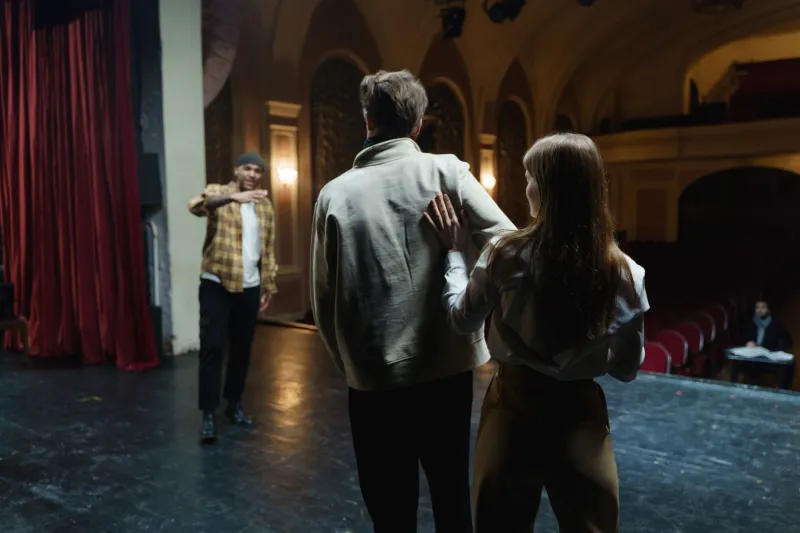
Village pantomime rehearsals are already a murder mystery: who has stolen the good wig, why the lighting desk only works when someone stands on one leg, and who keeps eating the prop biscuits. All you need to do is add a fictional crime, a few candles and a Dame with an airtight alibi. The result is a festive whodunit that feels less like a blood-soaked thriller and more like a very tense parish council meeting with better costumes.
Choose a Victim Who Deserves a Round of Applause
Pick a fictional victim the cast loves to hate: the society’s director, the visiting adjudicator, or the treasurer who insists on receipts for every scrap of glitter. The crime should happen off-stage and be described in the past tense. Something like: ‘The director was found behind the flats, slumped over the prompt copy. The only weapon was a very sharp pencil and a strongly worded note about blocking.’
That keeps things cosy. No gore, no trauma, just an outrage. The victim can even return for the curtain call, alive and complaining about the lighting. The point is not to frighten the audience but to give everyone a reason to eye the Dame’s handbag with suspicion.
Cast Your Suspects from Panto Stock Types
The Dame is an obvious suspect: she wanted more comedy, fewer ballads, and a solo number that did not involve a inflatable sheep. The villain is another: he has been booed by the parish council, overlooked for the role of principal boy, and forced to wear a cape that smells faintly of mothballs. Then there is the long-suffering stage manager, who has motive, opportunity and a clipboard full of grudges.
Give each suspect a panto-sized alibi. The Dame was changing wigs. The villain was practising his boo in the car park. The stage manager was wrestling the smoke machine into submission. None of these alibis should be quite convincing. A good rule is that every suspect tells the truth about where they were and lies about why.
Hide Clues in Props, Scripts and Costumes
Pantomime audiences already know where to look: the props table, the prompt copy and the costume rail. Use that to your advantage. In the Dame’s handbag, place a folded rehearsal schedule with one name circled in eyebrow pencil. On the villain’s cape, sew a torn hem that matches a scrap found near the scene. On the stage manager’s clipboard, leave a coffee ring and a missing page headed ‘Dangerous Cues’.
Scripts are a gift. Slip a page into the prompt copy with a different ending pencilled in the margin. Write ‘not this scene’ beside the victim’s final entrance. Add a note that says ‘ask about the trapdoor’ in handwriting everyone will recognise but nobody will admit to. Costumes can carry clues too: glitter on the wrong boot, a feather boa snagged on the scenery, a pair of bloomers in the prop hamper when they should be on the washing line.
Candlelight is the finishing touch, but keep it sensible. Use LED candles near tulle, scripts and the Dame’s hairspray. Real candles belong on stable surfaces, away from feather boas and enthusiastic gestures. The last thing you need is a second emergency, especially one that involves the fire warden and the raffle table.
Let the Audience Join In Without Taking Over
Pantomime is built on call-and-response, so use it. When the host says ‘Oh no it isn’t’, the audience replies ‘Oh yes it is’ and holds up a clue card printed in the programme. When the villain enters, everyone boos. When the stage manager drops a hint, everyone gasps. This makes the audience feel like a chorus of villagers rather than a jury.
To stop participation derailing the plot, print three permitted interruptions on the back of the programme: boo the villain, warn the hero, and gasp at the reveal. The host acts as prompt and peacekeeper. If someone starts a new plot, a firm ‘Later, love, we’re mid-denouement’ usually works. If it does not, offer them a mince pie and a seat near the exit.
Stage the Reveal Like a Final Curtain
Gather the suspects under fairy lights, hand round the evidence and let the Dame do the summing up. She should be theatrical, slightly wrong about the details and very keen to get to the interval. The villain should boo his own guilt. The stage manager should sigh, produce the missing page and explain that the whole thing was a publicity stunt for the village hall roof fund.
Keep the denouement to ten minutes. Any longer and the audience will start solving the crime themselves, which is fine in principle but ruins the raffle. End with a nonsense song, a round of applause for the fictional victim and a reminder that the bar is open. A panto whodunit works because everyone is already in costume and prepared to overact. You are simply giving them a motive.